
Debbi Clark
Debbi Clark is a true Camden local - she has been deeply embedded within the creative community since she moved to Camden in her teens in pursuit of freedom and self expression.
Immersed in the Camden and Soho art scenes while studying at Central Saint Martins, she honed her photography practice, built an A-list network, and worked alongside leading photographers. Debbi went on to shoot for high-profile magazines including Vogue, Tatler, The Face, and i-D.
Supported by patrons Helen McCrory OBE and Damien Lewis CBE, Debbi established the Sir Hubert von Herkomer Arts Foundation and continues to nurture the creative talents of young people in Camden.
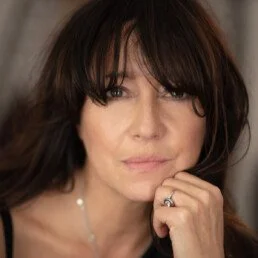
Image credit: HvH Arts Foundation
Listen
Read
-
“I moved here on my own. Um, so I kind of, um, I left home, uh, quite young and then I moved in with a friend of mine. She had like a squat in, um, it's now called Fitzrovia, but it was, um, round by Euston, you know, Drummond Street, up by Warren Street around there. Um, and there were like quite a few of us, which was really cool actually. Um, and, um, it was quite fun because I, I kind of met a load of people and then did a lot of partying. Um, was about sixteen when I went back home for about six months.
Then I left again. Um, I got myself a flat, uh, in Camden, in Mornington Terrace. So I got myself a flat there. Um, and I was do- I was hosting, like, at the time, I was like doing events and lots of parties in clubs and things 'cause I was pretty much going out quite a lot and meeting loads of people. Um, and I also went to study at Central St. Martins. Uh, got a scholarship. Um, and that was all through because living, like, like, like living with a lot of people in the arts like when we was living in Drummond Street and Tavistock place. Um, and then went up to Great Titchfield Street. So I kind of moved around a lot, um, an awful lot.”
-
“No, I didn't know it was artistic, but it was like, it did seem to be like a lot of, like, as we call it, the 'lost souls'. Um, that kind of couldn't really, couldn't really like commit to things. It sounds a bit weird, but, you know, school and, and at the time it was like, it was not very interesting. There was not enough education in the arts, I don't think. Um, too many children. It was like a different, um, I think for me, I never really got on at school. I wasn't the best at school. Uh, also years later I discovered I got ADHD, um, which might have had a little bit to do with it, but I don't know, um, <laugh>. But I was really not very consistent. And when I moved into, you know, my, my new, my 'new family' as I might call it, I kind of found my group, my, my friend group, and I kind of understood why we were quite erratic; 'cause I think creativity makes you like that. And I think if it's not educated properly, you really don't understand why you're so erratic. And, and, you know, you used to get called neurotic or you used to get called like, one day I was brilliant the next day I was naughty, you know, I was very up and down 'cause I got bored so quickly. So I think, you know, the system wasn't, you know, giving me enough of what I needed. Um, and then I started to take photographs when I was like living in, in my, my new place in Camden, uh, when I was on my own with my friends, you know. Um, and one of my friends said, ‘Oh my God, you are really good. You should go, you should go to college’. And I was like, ‘Well, I haven't got any exams, can't go to college’. Um, and that's why I went back to do some exams G- it wasn't GCSEs, it was CSEs actually at the time. Um, I don't think I did that well.
But anyway, I then started to get my book together. This was like going through parties and portraits and uh, and like just using my camera. But I was more interested in doing fashion. 'Cause there was like, at the time, it was quite like late eighties and it was like all about fashion. And it was really, really exciting. And there was so many different, different people. Like you could just dress how you wanted. There wasn't like, oh, follow this fashion. Especially in Camden, you know, it was like everyone was like, you've got the late punks and you had all this all new, like, Madonna was my kind of like, my icon at that time, I kind of loved her, and Debbie Harry. So I sort of had bleach, blonde hair, um, and like was just partying all the time.
You know, we was going to the Wag Club, we was going to like all over Soho, just going out and about. I then started to do documentary stuff in Soho. Like, it was like weird because you look at Soho now, it's completely sanitized and soulless. But back then, you know, you had the Girls Girls Girls, you had The Review bar. You had Jojo's, you had The Wag Club, you had all the clubs, and then you'd have like studios behind all the buildings and you'd have washing lines for the clothes. And then we started to hang out in one of the studios, uh, behind Greek Street, not Greek Street, Wardour Street, where all the houses were. And I've got loads of like, photos of all that, of when I was like sort of just going out and about.
So I got a foundation course doing fashion textiles. Um, and then I, as I was going around with my camera, 'cause I used to take like really closeups of like patterns and cheese and gravel and lines on pavements and water. Anyway, I just like got obsessed with my camera 'cause it was instantaneous. It was like magical. Whereas, you know, I was not the best of sketchers, not too bad, but it's like difficult. So it takes time. So for me, that was quite frustrating. Um, and I think that probably boiled down to my ADHD because I could never finish anything. Um, and with the camera I could, 'cause then I went into the dark room and printed and I was moving and sort of seeing this process happen. So then, um, Central (Saint Martins) said, ‘Why don't you go to the London College of Printing?’ And I got a scholarship there. And then I did my, uh, degree there.
Um, and then I came out and I was living in Camden, and of course then it was like, um, lots and lots of friends in Primrose Hill, um, you know, all the, all the, all the fun people. And that's kind of when I started to meet a lot of people that I really got on with, discovered my talent, nurtured my talent. Um, and then I also started a model agency back in the day. Um, and it was when, like, it was the Glamor Girls, um, at the page three, that is not allowed to happen anymore. Um, but back in that time, they became quite fashionable because the fashion, um, like high fashion people wanted something different. Um, and I had really like, 'cause I suppose because I was in a circle going out meeting people and just always on on, always out, out and about, completely, loved it. Um, bit, bit crazy times, but really fantastic times, you know.
And then I go to Hawley Arms and then we'd be going down The Good Mixer and then, you know, you'd meet, obviously there was Pete and there was Amy and all that lot there. It was, it was, um, it was fascinating. You know, it was a really, it was really somewhere that you really could be free. There were no iPhones, there were no screen phones, there was no body watching you and you were totally free. And I just think, you know, obviously today you've got, it's almost like Instagram, you know, TikTok, that people are literally documenting your life every second of the day. Right. But is it documentary? I don't think so because it's like everyone's just in fear of what they look like, they're not real anymore. You know? Whereas back then, which I suppose was so dangerous because we all did get quite crazy, right? Because we really were free. So it was a time of, of total freedom, total freedom.”
-
“So I think for me there, you know, there was a lot of, um, anxiety about, you know, money. Nobody had any money, yet you could make money because there was ways like, you know, the clubs used to pay you to, to sort of get people in the clubs. There was way to make money as in photography with me, you know, so you kind of made a living. But for me it was, um, it was like all or nothing. And then if you got into the right circle, then you would make your money. You know, which is why the model agency, you, you kind of, it's almost being a visionary, you kind of see things, uh, and it's all almost a natural progress. You can get stuck and like do nothing or you can just like enjoy your life and not worry. And I think for me, I didn't really worry about anything, um, because I didn't mind living with friends in a squat. I didn't mind not having- 'cause to me it was like, it was the most fabulous time of my life. I didn't mind, you know, not having money to buy a house. But I did buy a flat because it was the days back when Thatcher was in, um, and you got money to buy a council flat. And I bought my mum's house for her and my nan's house for her because I was making money from selling my portraits and working for agencies, um, and setting up parties in clubs.”
-
“It was fascinating and it was like amazing that they could like, you know, it was really weird because I was like, ‘oh, well what happens if the roof leaks? Or what happens if this is?’ Which is true, isn't it? 'cause you don't got your council house anymore. Then what does happen if that happens? So, and I think that is what happened to a lot of people, that they thought, ‘oh yeah, I'm gonna buy my house’. Like in a false sense of security, spent their money, right? And they couldn't, they got back back to where they started, which I think was a crisis that happened in the late eighties because it wasn't thought through properly. Do you know what I mean? So you, you don't think, um, I think for me, I did grow up quickly and I was very independent and self-managed. And I think it's like, I had a lovely family life, an amazing family life. Comfortable, you know, like, like even though it was on social housing estate, we were very well looked after. Um, but I never felt poor, you know, because I was rich with family, but I wanted more. I wanted to see the world. And I think that's trouble with some social housing places is that they put everyone in one place. Like, ‘oh, that's social housing’, right? Which is, which is full of the same kinds of people, uh, whereas it is not like integrated with people that might be buying their houses. So you start to get a different type of community. So you're put into one place that is like, nobody gets out and you don't go without a square mile of your estate. So I think by now, I mean people are quite against this regeneration stuff and everything else. And there is a limit to what you should be doing. And there is also limit by moving people out and not moving people in 'cause I think that is, that is really unkind and sad. But I think if it's like really thought through properly, you can get that dynamic, then you build a community whereas you look after each other and people see another side of the world or another side of like, you know, you could live here in Camden, in Queens Crescent. And I, I'm now like, you know, 2024 and I'm like, you know, 58 years old. And basically I've seen like some kids that have not even gone to Swiss Cottage, right? So, and then there'll be, when I went to, um, when I was in like Camden, you'd see like the Regents Park estate and they wouldn't go outside of that estate. So I think by developing stuff, it's quite good. And there's also the bad things about it. But in all honesty, I, I do think it, it is starting to open people's eyes and say, ‘God, there is another world outside these brick buildings’, you know, this square mile. So I think for me, I, when I, the reason I left home, I couldn't stand it. I felt so trapped, so suppressed and I just couldn't grow. And there were like, those kinds of people used to look at me and go, oh, like, oh, I, I dont know, it was kind of like a lone wolf I suppose. Didn't have a massive group of friends because I just, just didn't agree with everything they were saying 'cause it was very, very negative. Um, and some quite ignorant and I wanted to, and I think by leaving, that's when I found myself and I grew and I grew up.”
-
“I think it's not changed that much because I think it's kept its identity, right? Uh, and I really do. And I think that's why Camden is probably one of the most, um, eclectic boroughs. Uh, you've got, you've still got your original, you know, like we were talking about. We've got Queen's Crescent, you've got Lambs Conduit Street, you've got Marchmont Street, you've got these independent streets. Uh, which back in the day were really also, they're not changed that much in all honesty, apart from being pedestrianised, you know. And I don't think that's a bad thing. Um, because locals will just walk there anyway. And if you are driving and you're well enough to have a car, then you will just park around the corner, wouldn't you? I don't think it's a massive problem. And I just think, for me, it's really important to keep the independence, really important, 'cause that's what makes Camden so pure. Uh, and even a club scene is, you know, you've still got, you've still got, have we still got the Ballroom? Yep. We've still got the Ballroom. We've still got The Good Mixer. We still got the Hawley Arms, so they're all there. Right? Um, in fact, I went to the Hawley the other night and it was still, I mean, not the same, same vibe, but it was still got that raw energy, that music that, that kind of feeling that people were like really, really purely happy and not sitting there with a cocktail trying to pose and be pretentious. So I think Camden has still got its rawness and it's still got its community and real people. I don't think I've been anywhere in Camden in the last five years where I've felt, ‘oh, this is a bit pretentious’. I haven't. So I think that's, we've still got an edge. We've got the edge. We've gotta keep the edge.”
-
“So when I was at school, um, you know, you have to start your choices and I wanted to do Drama, French and art. And my mum was like, ‘No, no, you have to do typing. Um, and you, you have to do, um, English’. Well, I say everyone has to do English obvs <laugh>. But, um, I did typing and like really like boring stuff 'cause she just wanted me to get a job so I could pay rent. And um, I was like, ‘I don't really wanna do that mum’. She goes, ‘No’. So anyway, I suppose at that point I just thought, you know what, I've gonna have to, 'cause I've gotta pay rent. So that was the mindset I was put in at that point. Right? And then that was the beginning of the, the suppressor. That was the beginning of like the, the feeling I'm in jail, the feeling that I couldn't get out. And that was the point. Then I thought, I hate this. I don't want, do you know, I was really bored, you know, all I wanted to do was French and drama. I wanted to be an actress. Of course, I suppose we all do. Um, or, or it's a, it is a dream but, and an artist and I could actually draw not, I'm not brilliant, but I could, you know, better than better than my english and maths. That's for sure. So, um, so yeah, I was stuck in that scenario and I think that's why the rebel came out in me. That's why I just thought, I actually hate this and I could've just like, I could be dumbed down and then became, you know, subservient and carried on doing that. But I think I had too much ambition and that's why I left.”
-
“I think it was a fashion aspect because of all the incredible people, like, was so independent, didn't give a shit about what people thought about them, and literally just went out on their own. And that might be because a lot of people came from out into Camden when there was this housing, uh, availability and it wasn't cleaned up so much. And when you could have like, oh God, there's a house down the road, let's go in there. Do you know, that's what I think. I think, you know, it was like a whole plethora of people from all over the UK even and like would come the runaways or the lost souls or you communicated together. They weren't all living in Camden anyway. They were from different places. You know, they were running away from rich parents that like, they was again, I think the jail breakers and, and I think St. Martin's was full of them. That that was my time there. And I think when I went to, um, when I went to the print room, I would be in the print room and I'd be hiding under the print desk. And when I would like go ‘Right, you know, time to go home’ thinking ‘I'm gonna have an all-nighter in here printing’, 'cause I loved it. Right. Absolutely loved it. And then they'd be like, 'Debbie, where are you?'. And I'd be like, ‘God’. It was like, that was my passion, the dark room at the time because it was that magical place. But you would, you know, you would be hiding in under the-. I'm like, got to sign out and come back in. Right. So it would be, so it was quite a place of freedom, a real place of freedom.”
-
“So after, so yeah, I went from fashion to photography 'cause I couldn't like finish my sketches or get my head around it. And I don't think I was talented enough in my honest opinion. I didn't have it, you know, it was a bit like, uh, it was a bit like ‘I wanna be a fashion designer now’ like I wanted to be an actress in a French, you know, singer back in the day. So I think it was, I didn't, I hadn't found my thing. Um, but by being at fashion, it it by going out with my camera, getting my patterns and textiles and thinking of ideas, you know, for backgrounds or what fabric I'm going to use and or how I'm gonna portray it. What am I gonna do on top of it? Am I gonna do a screen print? Am I gonna do, so it was about having a char-, having that instant image in your mind. 'Cause I could never draw it 'cause I'm not really great at drawing. So I think that was my transition. And then photography, that's when I fell in love. That was when I found my, my my, my love. You know, my baby, my everything. It was, it was just like pure magic.”
-
“Uh, well I'd go to the studios. I mean, one of them was Iain McKell, um, who, who still is here? Um, Terry O'Neill, um, who I assisted. Um, it happened, again, by getting out there. You, you have to go and knock on doors and you have to be brave. And I had a lot of bravado back then. I suppose I still have, you know, 'cause I wanted it so badly. And yeah, I was sweeping floors. I wasn't really doing much more than that, you know, but I was in, I was in, I was in the system. I wa- I was, I was um, I was in the crowd. I was, I was doing what I wanted to do. I was seeing things, I was learning. I was watching. I was like literally like, you know, sweeping floors, making tea, whatever. I learned so much just by being in that studio's environment because you know, I remember one day he said, ‘Can you change the film?’ And it was a medium format. And I thought, ‘Oh God’. And I remember I was like, so nervous, that I nearly dropped the camera! <laugh>
And then the first said, ‘Okay, I'll do it’. And 'cause I was like, you know, because it was like change of film and I, I was so nervous 'cause all I'd been doing was like almost second assistant, like being a runner and suddenly you're like, I have to change the film. Which is easy to do, but I just literally was like, I couldn't do it, because my nerves got the better of me. So there'd be time, you know, that's what I think there's times then you that it's not even a challenge changing film. But at that point it was such a challenge and I thought, oh God, I'm like, so the first did it for me. And I guess I said, ‘there you go’. 'Oh, well done.' You know, and he was really nice. So it's like, it's a bit like tiny little things like that, tiny little things like that.
Um, if you've got nice people around you, it makes life easy. I could have had a really horrible mentor and he would've shouted at me and I'd have been sacked, but I didn't, you know, and I think, I think it is, it is really important that you be kind to each other. Because there were times I worked with some people not mentioning names, that they were so mean that you literally felt like dirt on the floor. Dirt, you know? And I think that is not so, you know, there's your difference. There was the late eighties, nineties and it was like, it was wild, you know, people, there was no cancel culture. There was no snowflakes as we call 'em now, it was like, well get out, you know, f off, go. It was like that. So you really had to have a hard back, a shell like, like an armour or you would crumble. You would crumble. There was no room for that then.”
-
“Yeah, I suppose my, my best friend Helen McCrory, which was, um, in 2011, um, I met Helen, um, and I had met Helen before that 'cause we'd go to Soho House and we, we were friends back, back way before, um, I was a founder member of Soho House in Soho. Um, so was Helen, so, and Frances Ruffelle, and quite a few people. And we sort of hang out quite a lot there. And then our kids went to the same school later on. Funnily enough, we didn't know this, but our kids went to the same school. Um, and Helen was at the gate and I was like, ‘No!’. And she was like, ‘Yes!’. And I was like, ‘my goodness’. So we were like, that's when I set up HVH or Sir Hubert Von Herkomer Arts foundation. Um, and Helen became my patron.
And Helen mentored me through my photography in a way that I was never, never would've thought possible as even though, you know, I'm a photographer and I do fashion and I've worked with many, like people like Kate Moss, Sadie Frost and Paul Weller.
And like, I've done lots and lots of portraits. I never ever felt I'm good enough because I'm always challenging myself. And sometimes even now I look at and I think, ‘Oh Debbi that was really crap. Why did I do that?’ But Helen's like, ‘You are joking’. You know, she gave me that confidence. She gave me, she empowered me as a woman because I was in a world full of men and really good fucking photographers. You know, like, you know, you David Bailey, Terry O' Neil, Iain McKell, you got all, you know, uh, all of them. Brilliant. And then there was, obviously there's Annie Leibovitz, but she's like way up there. I'm not saying I'm Annie Leibovitz, but I mean I'm, it is like Helen gave me that real confidence, that real empowerment to get to believe in myself. And she was the one that suggested that I had an exhibition with all my portraits because I'd set up this charity.
I set up the charity because of the, uh, 2011 Tottenham riots. Um, Because of the anxiety, um, and the youth clubs were being taken away. There was no money for art. There was no money for youngsters. The youth were just lost. Everyone was lost. You know, everyone was angry sometimes, you know, it was getting quite bad. Then the riots happened, and I set this up 'cause my husband's great-great-great grand grandfather, is Sir Hubert Von Herkomer. Um, and he came from working class background. He also made it as an artist, one of the only artists to paint Victoria, Queen Victoria on her deathbed, he's in the National Portrait. He had the philosophy and an ethos that he started Academy out in Bushey to support, um, the, the, the people that couldn't afford to paint because arts was expensive. Still is really, isn't it? So it's still a very expensive industry. Um, so he did that. So I thought, do you know what, and I was speaking to Helen and she goes ‘I've got it! Got it. I've got this’. So she said, ‘Have an exhibition, get all of the people, the actors and musicians and everyone that you've done to sign off a portrait and sell it.’ So that was the start of it. That was the start of it. And we had that at the Strand Gallery, um, with Alex Proud, know proud galleries in Camden? So that was Alex had Proud Camden, Proud Galleries in Camden. He also had a little one in the Strand. And I really was like, you know, I think I had about 20 portraits then that were powerful enough to have an exhibition. So he gave me the Strand for free and he said, I'll support the charity. So Alex gave me The Strand for free. Um, Helen, um, was the, the real, real push on that one. Um, she donated a portrait. Damien Lewis, Paul Weller, Kate Moss, Sadie Frost, oh, Jane, Jason Isaacs. Who else was in that? Oh, this was my first one. So it wasn't major major. But anyway, all those portraits sold and I had enough money to support state schools in Camden. So I was still working as a photographer. But this was the, this was the sort of lead up to um, growing a charity. Um, for me it was something I could give back to being in a state school that I absolutely hated and never had any resources. Um, my, you know, my passion was to like really support young artists and give back to state schools 'cause they don't really have enough money either. And you know, I'd go to state schools. They didn't have an art room. No art room. I was doing it in a maths room teaching photography, teaching art. So I think for me, I could give 10 weeks of courses to five state schools in Camden, carry on working as a photographer. And then that's how I sort of started the charity. It was very, very small. You know, it was probably about £12k a year.”
-
“We got given this space, uh, by Camden Council and this is 44 Ashdown Crescent, just off Queens Crescent in 2018 as a popup space, when you were doing all the popups, Camden Council were doing all the popups.
Helen came with me, she sat there on the floor, there's nothing in here. Um, and I said she put like, Manon and Gully were with me. That's, that's um, Damien and Helen's children, my godchildren. And we all sat on the floor here in the corner and Helen started sketching with them. And I think she's still here with me. She's always here with me. Sorry I'm gonna cry in a minute. I won't cry. And I think she brought that sort of energy to this gallery and I think that energy's still here. And I think it's a really positive energy in here. And everyone when come in and says, ‘My God, you can really feel the space’. Because it was done with so much passion, so much love, you know. And I came here and I still, I was, well I am a professional photographer, but I was working all the time and I gave up six months of my summer because I had to pop up just to see is this really needed? Is this community really in need of something like, you know, the arts, will they get it. Oh my god, they got it. There is so many incredible gems, jewels in this community. Young people that are so gifted and talented that would not have what they've got today had we not been here.”
-
“We got an award with the Mayor of London, Sadiq khan. This is when we first came here. We got the 2019 Culture Seeds award for the young creators. Um, development. We got that as one of my proudest moments, seeing my children and young people since the age of seven years old when we had the popup gallery. And there are 25 of them still here as young adults going into, one's gone into Brit school, one's gone into Central St. Martin's, one's gone into Elam College, four of them are going to Central School for Speech and Drama. They've got a short film coming out with Freddie Fox. They've done something with Sadie Frost, Twiggy documentary, being on set running, um, and having a part of like a real job in film. Freddie Fox got us into Slow Horses with Gary Oldman.
Um. They make me proud and seeing the children come now come back and say, ‘Do you need any help?’ Yeah, they're all on the courses still. But always phone me saying, ‘Do you need me for anything?’ 'Cause they've grown up into a real independent, young, confident individuals. And I think another proud moment is we, I curated, developed a project called the Music Mentoring Project. Young people in music, because music is so difficult to learn unless you are, you know, you've got the instruments. Um, I developed this four years ago here, at the gallery and we started to go uh, to Pirate Studios, another Camden, um, massive, I love them, who have supported us so much. We've had two grants of them and they give us 50% discounts as well, when we don't have our grants running. Um, and the last two years developed, there's 10 young people in the band, the older band, now called The Crimson.
And we've got two younger development bands, which is another 10 and 10. So it's 20 kids in that. So, and then there's the Studio Boys which- and Girls which are kind of like, um, schooled at the unit. So they're kind of, some of them are at risk of some, but they are mentored on another level. So I think my proud, my proud moments of seeing them come out and actually like perform, and be confident, and be proud, for once, of what they're doing rather than being downtrodden on. And then the older band, the Crimson, like they played at Camden Inspire, played at Wilderness Festival, they played at the Scoop. Um, and they might be going to Paris and we're doing a switch with another youth charity to come to Camden. So trying to get a gig in Camden for the young band. So there's so many proud moments just of, yeah. Oh and we won the HAF award, which is the Holiday Activities Fund award, um, from Department of Education last year for um, regional and national. So that was a very proud moment. Um, that was amazing. So yeah, there's lots of proud moments, I see. And then we developed the McCrory Award in honour of Helen. Um, and six young people are recipients of that, which helps them with bursary funding access to college years resources and one-to-one mentoring.”
-
“Exactly. I think don't break your spirit. Don't break spirits, don't break. You know, if you are feisty, good, be feisty. Do it. You know, you've gotta reign it in though, you know, because you'll get in trouble. I got in trouble when I was young. A lot, a lot of trouble. Very feisty, naughty, bad, right? Stuff I shouldn't have done. But I, I can see it 'cause I've done it and that's when I see it and I think, okay, there might be a problem, I'll do it very nicely. I won't sort of say you should- I’d like-, I'd mentor them and I'll understand why they might be having a problem or why they're doing this because you know, there is no wrong in life. Um, well there is I suppose, but I dunno, I don't think there is. I think, you know, you just do things. Don't be ashamed if you've done something wrong, you're just like, okay, you've done it, you can move on. And you evaluate that. You meditate on that and ‘meditate’ is a word that's used like, you know, blandly. But what I mean is you think about it and you try and understand but don't, don't punish yourself over it. Crikey, we've all done things right? So just, just get on with it. Tomorrow's another day we're gonna be better <laugh>.”
-
“Getting together, brainstorming, giving them access to creating such as Camden Inspire, such as events that then in involve younger people, involve all artists, residents, communities, not just big companies and say, ‘oh, can you deliver this?’ When you go to Camden Inspire, they were like, you know, funny enough, one of my mums is there Thimberland, um, doing her, um, sewing and knitting and, and you know, stuff like that makes it real. Stuff like that gives access. And the spaces such as the arches, the good yard by putting on events opens it up, to bringing, in community values by giving people, like ... people you haven't seen sometimes for years. Camden Inspire, for instance, I met up with Joe, an old friend I hadn't seen for four years. And I was like, ‘oh my god! That's community.’ That's what the Camden spaces do. You know, by putting up and opening it up to all of our communities in Camden and bringing it together in such an easy accessible way, not paid, not ticketed, like a creative event. I think that is so important. Um, and it should be like ongoing. Even winter festivals even stuff like that. I think that's really important because that's when people are like, do you know what? We had a party here and we have our annual summer exhibition here every year. I'm gonna tell you the story 'cause you're gonna really love this. And we have a cake. Cake is our thing. We always have cake, at the end of the show. Crimson performed, the young band performed the visual arts. Little girls and boys performed the, uh, dance, not age five years. Everyone performs, does their recitals. We have art and then we have cake at four o'clock. We have cake every year. Three lovely old ladies come from the old people's home and she said, said 'Hello, I've haven't seen you for a year!’. And she goes, ‘I've come for the cake.’ And she said, and she said, ‘I had a heart, I've had a heart problem been on the heart monitor’ today. She goes, ‘but we can hear the music, we can hear all the-, all the music and all the, like, all the joy. And she said, and she said, 'we always have cake at four. I said, I said to my friend, let's go and get our cake.'
They walked up and they got their slice of cake on their plates and they walked back and she came, she got up just to specifically come and get her cake. And she remembered that from last year and the year before and the year before. And I thought it was, and I didn't even know that until, until that Saturday, August 31st. And I just thought, oh my God. Nearly cried. It was like such a beautiful moment. And that's community. And everyone was saying, you always do a party. There should be more parties like this because it brings everyone together. Like we use Blue Sea Fish and Chips, we give the children a token, we pay for it, they get their tokens and QC Grill. So we all support each other, which is so important.” -
“I've done lots of shoots, um, down the Canal actually. It's one of my favorite places. Um, in fact when I mentor the new, the new slightly young photographers, I kind of make that as one of my spaces, um, to show them like because of, you know, they've got Gasworks, you've got Kings Cross now, you've got the fountains there, but then you go down the canal and then if you walk from St. Martin's going down to Camden, the, the way it changes, you know, and you still got the old part of Camden, you've got the bridges, um, then you've got the lovely lock, that little house on the left, then the light, the way the light falls, you know, through certain parts of canal, then you've suddenly got the darkness under the bridges. Um, I think that's the most fascinating, um, walk as a young photographer or even now, you know, I often walk from Kings cross down to Camden.
I love that walk. It's, it's the barges, do you know what I mean? And then, you know, you can make up stories even in your head like, oh, what's in the canal? So one of them said, 'I can see a sword in the canal!' And then the other one said, 'No, no, no, it is a wand!' And like you're like ‘Oh my God, I love it, I love it’. So just like the, the creativity that comes out and then you come back to the, you know, then you get out the stables market at the back and you walk through. I love that. I love that place at Camden. It, it's, it's, and you get different pictures every time. Every time there's a different shot. It's amazing”