
Marcus Davey, CBE
Marcus Davey, CBE has been Chief Executive and Artistic Director of the Roundhouse in Camden for 26 years. He transformed the building from an industrial relic in disrepair, into one of the most iconic cultural institutions in the capital.
When we spoke, he traced his path from leadership roles at the Dartington International Summer School where he ran large-scale creative programmes, to his time as Artistic Director and Chief Executive of the Norfolk and Norwich Festival in 1995, where he led a period of major growth.
Since becoming Chief Executive of the Roundhouse in 1999, Marcus led the transformation of the Roundhouse into a world-class performance venue and creative centre, including the Roundhouse Studios and Youth Programme, supporting and working with over 11,000 young people every year.
Listen
Read
-
“Actually, not in London. I was born in the Midlands and then moved- my family, uh, my parents were teachers and we moved to Gloucestershire where we spent about eight years. My dad taught in the big comprehensive schools, they were called then, it’s now an academy I think. And then we moved to Cumbia. So I actually really grew up from about the age of eight to Cumbia. Um, and it was going from a kind of small, local way of life in Gloucestershire to suddenly this kind of very rural kind of environment. And I- took me a little while to get used to it 'cause it was also colder and I didn't know anyone and my old friends in the primary school weren't there. And you know, it's kind of very different and strange, I suppose, looking back on it now, I probably wasn't enjoying myself very much and I didn't enjoy school. I was bullied a lot and it was horrible. But going back to that area now in Cumbria, it's really beautiful and I kind of miss the countryside as well. But when I come back to London, I'm always very happy to come back.”
-
“My dad got a new job and um, actually both my parents in the same school were teaching and, uh, so to the rural wilds of nowhere. And, um, after my parents rented a house and then we finally got somewhere and you couldn't really see another house from theirs. It was just fields and sheep. A lot of sheep. Loads of sheep!”
-
“They were, um, art teachers. So, um, they were both visual artists. Um, uh, they are, I suppose they're still making some art now, but I mean, um, yeah, so we are surrounded by art and whenever we went to holidays it was like, ‘Oh, there's a medieval church, let's get outta the car and have a look at that one’. We are going, ‘No, we don't want to go. Don't take us around the museum’. And now we’re saying- well me and my brothers are saying with our kids, ‘Oh look, there's a medieval church, let's get out and have a look at that and look! There's a museum, let's go and have a look at the museum! There's some art, let's go and have a look at the art’. So I think we probably rejected it for a while, but now we're kind of plowing through books of art and music and music and, you know, theater and dance. For me, the performing arts are kind of more my thing than the visual arts, although I've worked a lot in the visual arts there and I have, I, I nearly became a ceramicist rather than a arts administrator. I nearly went to off to study pottery 'cause I love doing that. And I, I sold most of my pots so I couldn't, you know, I, I don't really have many left, unfortunately. But at one day I might get back into that.”
-
“I think it was absolutely the heart of why I do what I do today. So I mentioned that, you know, I found school challenging, you know, it's a pretty bullying culture. You know, the southern kid from Gloucestershire probably talked a bit like, you know, with a bit of an accent and then kind of Cumbria didn't have the Cumbrian accent and then to senior school and that was really horrible. I didn't enjoy it at all. But my parents were teachers at that school, so it was difficult. Um, so I found myself in doing music and ceramics and some sport, pottery, there was a pottery in the school, which was great. My mum was my teacher, actually. And I found that the arts gave me a place that was safe and creative and I could use my imagination and I could excel at something. And another thing is that I was at the bottom of every single remedial class for everything else, all the academic subjects I couldn't do at all, even before my O levels, they were then GCSEs, the, um, one of the teacher form teacher whatever said to my parents, ‘Oh, Marcus shouldn't do any, he's gonna fail them all.’
Um, and uh, I got nine so it was weird. But um, I was diagnosed with dyslexia at 50, so I had all my life of not understanding why all these things didn't work. And um, now if actually I look at it and think because I couldn't do those things, it meant I could do those things - and it's absolutely brilliant that I was able to do that. I also think that they, a load of teachers just kind of gave up 'cause I couldn't do it. So then I just focused the things, on what I could do, which is also; organising concerts. So from the age of 14, I started organising concerts and putting shows on and I've never stopped doing it. I don't think there's been really a year where I haven't been involved in something since. And I found that that was an environment that I kind of created and I just carried on doing the same thing.
I went off to music college in Devon, really beautiful. And again, I was left to get on my own devices and created something and it kind of went from there. So this kind of horrible, male, bullying environment to a celebratory, creative environment where everyone could be themselves and you could use that as your kind of superpower, um, gave me a kind of understanding of people who were bullies as well, and usually they were suffering from some really bad stuff happening in their lives. Um, I know I'm talking too long, but I'm gonna tell you a little story. Um, I was coming back on the tube from somewhere one Sunday recently, and this guy on the other side of the tube was staring at me and I was sort of going, ‘this funny guy staring at me’ and he stared at me and then suddenly got up from next to me and he came and sat next to me and he says, ‘Are you Marcus?’ And I went, ‘Yeah’. He says, ‘Are you Marcus Davey?’ Um, and I said, ‘Yeah’. And he told me his name and I went, ‘Oh my God!’, this guy used to have lovely kind of red curly hair, he was as bald as me. And um, and he said, ‘I think about you all the time and I feel so guilty that I bullied you when you were a kid, when we were kids. And I just wanna say sorry. And I, I don’t know if you could ever forgive me, but I'm really sorry. I really, I've messed up badly’, but, and this poor kid’s dad had just died and he didn't know how to let it let out. Actually he was a really nice kid. I liked him. Others weren't so, but, and I suppose what I'm trying to say is that if creativity was good enough for me and the arts good enough for me to give me a life of amazing richness and color and vivacity, that's a word, then it's good enough for everyone. And I think that has been the driving force for a whole of my life – it’s why I do what I do.”
-
“Yeah, yeah, yeah, yeah, yeah. It was me and my friend, me and my cello, uh, somebody on two, two guys on piano, me and my cell, and um, I think it might have been, I can't remember exactly what we played, but I remember one when I was like 15 or 16, which is the same lineup probably, um, uh, I had written some music, so we played that and a few people turned up. So that was it. But, uh, when I was at music college, I had been, um, I was doing a bit of a placement in a, in a home for people with disabilities, which actually had a different name, which nobody used anymore, luckily. Um, and I was volunteering there once a week with my friend, um, he had a motorbike and so you get us the 10 miles to where where it was, we go on the back of his motorbike and he was actually a much better musician from me.
There's one person in this home who had no verbal skills at all. He wasn't verbal at all, but he was an amazing musician. He was quite physically disabled, so he's, he'd- only some fingers worked, but you would go ‘la la la la la’ and he would go to the piano and go ‘da-da-da-da-da’. And so we would try and learn to play songs and do stuff and write music together and things like that. And I said to the people who are running this home, I said, ‘Oh, have you got some percussion instruments? And have you got this and have you got that? And a video camera would be really helpful’. They said ‘We haven't got any money. There's no money for any of this’. I went, ‘I'm gonna go and raise you the money’. So I went back to my College of Arts and said, ‘I want to do a fundraising concert for, for this’. And they said, ‘Okay, well it's up to you if you organise it.’
72 hours long. 'Cause everyone wanted to take part - 98 different groups taking part. And we ra- they needed a thousand pounds, which in 1987 or 87 or 88, was a lot of money, I suppose it was
£10,000 pounds now. And I was only raising it from students really, so it was like 20p for a cup of coffee and you know, 20p for a ticket. And we raised £1500. So I went, I took it in cash and gave it to them <laugh>. And it was just great. That got me into fundraising, I suppose.” -
“Yeah, uh, it was absolutely wonderful. Everyone turned up on time and we did, um, the first 13 hours were, um, Indian music, 'cause I knew a lot of Indian musicians - I played in some of that as well. I was doing some ragas and stuff on my cello and things like that. Absolutely fantastic. Um, I love that. And I think what we got out of it was that a lot of people came 'cause they not only wanted to support each other, but they knew that it was a good cause. But also they wanted to be part of something that was an event. And I think that was the thing that kind of got me itching to want to do this for a career.”
-
“No, nobody's ever done anything before or since! You know, and you know, it's, it was great. I think it's, it's a lot of, it's on video tape somewhere. Um, I've got someone cassette tape as well. And it was, some of it was really amazing quality and some of it is pretty dire, but it was solid for 72 hours. And then we finished with a, a friend's band called Roger's Shoe, which doesn't exist anymore, but all the members of that gone off to be musicians and they said I could go and play the cello solo in it, and so I did. And I was so tired - I'd been awake for the whole time and I think I was awake for like 90 something hours. And so apart from the joyous rapture of it, I was really ill for about two months afterwards. And this is during my finals as well.”
-
“Yes. So it, it was this place called Dartington, where I went to college. It's Dartington College of Art. It doesn't exist anymore. Um, and um, this was my first proper job. I've been doing loads of jobs, like working with the farmers, hay making and lambing. And I've been working in cafes and restaurants and bars and toilet cleaning and everything, you know, everything. Uh, people mowing people's lawns and getting 20p an hour or whatever it was. And that was great. Um, my first job was the, I think it was called the Administrator of the Dartington International Summer School of Music. And um, six years later I was the Director of Arts for Dartington, or I think they called it ‘Art Manager’ or something like that, but it literally was that. So I'd gone from this kind of like, I think just people had left and they thought, ‘oh well who could do that? And it is him’. So I was just very lucky. So I went, I was programming concerts and I was overseeing the management of it. But this summer school of music is extraordinary. It still exists today, but it's not in Dartington, it's moved to North Norfolk. Um, and my wife was a performer at it, my, um, eldest son is volunteering in the office of it and my other son was taking part in masterclass at it this year. So it's still part of my life all these years later. It was wonderful 'cause I was doing everything; meeting world famous artists to organising, you know, how to lay out the chairs. And I was learning every single thing along the way. And there are people around us who would guide me and there was an amazing guy as the artistic director who just was, you know, like a mentor for me as well.”
-
“Um, I suppose because I’d started and there was no public funding for what we are doing and um, I think there was always a thing where the older audiences look back to a kind of heyday of the great artists would come and, and I just went actually now is now. We are not in the past, we've gotta be now. So I was trying and do as much contemporary stuff as possible. Um, and I think I was very fortunate to have a kind of seven year run at the summer school and it grew massively and really successful, and we had 150 concerts over five weeks and all these masterclass workshops of choirs and people coming from all over the world, just amazing. Um, but the challenges were also under- being under-resourced and feeling you just have to do everything. And I didn't know any different, so I just carried on doing it like that. And then I, looking back, I was sort of going, how on earth did I survive? I wouldn't have that energy now. It'd be impossible. Have to be me and Simon Pitkeathley!”
-
“So can it be a, um, when I got the job here at the Roundhouse, um, I just turned 32 and the founder of the Roundhouse, an amazing man called Torquil Norman, um, he lived down in Camden. He only died a few months ago. And, um, he had been around the world, he'd done everything. He was a toy maker, but he'd been a banker and a lawyer and this and that. And he was a toy maker and he made Polly Pocket and The Giant Yellow Teapot, and he was just retired and with the money he had from selling the toy business, he had bought the Roundhouse, turned it into this creative center and performing art space for young people and audiences. He's about 11 feet tall. Uh, well actually he was about six foot eight, very tall man, and he was the most persistent and most determined person I'd ever met in my life. Um, remarkable generosity and kindness and warmth, but also dogged determination. So if you believed in something, he would argue with you if you had some, a different opinion. And it would take years sometimes, to go through, which was endlessly challenging, but you’d learn something from it all the time. And he, he stood down as chair, founder and chair, in 2007. And, um, the biggest partnership of my life, I suppose, was working with him to take the Roundhouse from this redundant building to what it's today. And I suppose I brought to the table, um, persistence, determination. But, he had some contacts, I had some contacts, I had all the artistic community and the arts council and those kind of contacts and, um, understood young people working with young people all my life.
And he had this, it was his driving force to want to do that. He'd worked with young people for the toy industry, but in a very different way. Um, so we became this amazing team and a partnership where people would say, you're an amazing partnership. Um, I'm sure he got very frustrated with me though, and, um, because uh, I'm sure I could did half the things he'd like me to do. But we kind of got through and then we remained very good friends. And, um, I saw him just before he died and he was an amazing, amazing person. Nearly 92, incredible. He gave so much, you know, a lot of people retire and take whatever they can. And they would say, ‘Well, I'm going to sail around the world, or I'm gonna do this, I'm gonna do that’. And he gave a large chunk of it away to others and then worked for 10 years for no money to make this place possible. So that is the greatest partnership I could ever hope to have.”
-
“I think a bit of both, but I always had an intention to involve young people all the way through, 'cause that's actually where, you know, I was one of the young people when I first started and even coming here, I mean, I was only 32 and our age range now is 8, is um, 11 to 8, 11 to 30. So I was only just outside the age range of some of the young people I work with now. Um, so it does gives me a kind of insight into contemporary culture. And actually the Roundhouse is known for its pioneering contemporary culture. So the only way to do that is by- to continue doing that, is by working with young people. So appointing young people onto the main board of trustees, having a youth advisory board and engaging with young people in lots of different ways is the way that the Roundhouse remains what it is and continues to be and actually should reinvent itself all the time.
So definitely I meant to, and definitely at Norfolk and Norwich festival, um, I was involving, you know, world class artists with young people on stage and at Dartington, uh, it was all about, it wasn't just about young people, it was people of all- it's intergenerational, so you get lots of students who raise lots of money for students and young people to come to this summer school, and like masterclasses and whatever. But, um, there were much older people, so it was a great way to bring people together. I did become a trustee of the Hackney Orchestra's Trust and um, a friend of mine set it up and there's like so few string players in Hackney schools, now there are a lot more. The work he did was amazing and I managed to raise- help raise the money to bring them down to Dartington. And that was one of the greatest things I think I've ever done in my life, even though I don't know if many people remember it, but these were young people who've, many have never been outside Hackney, let alone all the way down to Devon, you know, and didn't know what the animals were in the fields and, you know, and arrived and they were, had their Sony Walkmans on it was so long ago, and they kind of weren't talking to each other. At the end, they were on the lawn doing leapfrog with each other. And I remember it so well, playing concerts, classical music, um, and it, and a lot of them went on to become classical musicians, you know?
It's a whole life which is in front of you. What I've noticed is also that kids in school, young people in school, pupils in school, if they take part in music or theater, they get noticed because teachers want to come, the head has to go and see it and then they kind of open doors, then they get more confident and then they'll do this and then, and it's just a self-fulfilling prophecy. And I also found that if you, with my kids going through school, all the concerts I've been to of theirs, it's kind of a similar group of kids. And they're not only excelling in music and theater, drama, but they're also getting the top academic results. And they're the more competent young people and they are doing this and they're volunteering and they've got a vision for what they want to do in the future. The arts have this incredible power to help you see the world and be seen at the same time.”
-
“So, uh, when I first arrived, it was for my second of three interviews, it was with Torquil. There was a little metal box kind of office outside the, on the muddy patch, which is now the yard. Um, the Roundhouse was completely redundant. Ken Campbell, the theater maker, was rehearsing in some space. There hadn't been a, a proper program for 20 years. And there was kind of ad-hoc bit of this and some of that, some things amazing, but, um, it was falling down. It was literally falling down. There was a generator for the electricity, there was a generator for the heating. There was, um, four people working here and a Torquil Norman talked to me for two hours. He didn't interview me <laugh>, he sold it to me. And I said, I butted in at one point, and he said, ‘Oh the arrogance of youth’.
And he was just joking with me because I'd, I'd kind of pushed my way in. And anyway, I got to the final interviews and got the job, and then I arrived in 3rd of August, 1999. The world had changed, there was New Labor come to power, um, and the world seemed to kind of bright of possibilities and lots of things were happening. The Lottery had been instigated in 1994 and lots of the projects were starting to open and, you know, we were looking forward to the millennium, and there were a whole range of amazing things that were just kind of happening. So you thought it was possible. Um, it was existentially difficult 'cause there was no money raised, Torquil had bought the building, but we needed to raise 30 million quid. And I suppose with inflation, that's probably like 60 million quid now. Can you imagine going out and raising 60 million quid now for a project for young people? Which wasn't the thing. Art organisations, some, some did a little bit of education with young people, but we were going to be a center for young people with an amazing performance space. I got a postcard when I got the job from somebody and it said, ‘You're completely mad that building is cursed. It's never going to work’. 'Cause so many times it had been tried and failed, tried and failed, tried and failed. But I, over the coming months and years, we kind of got a business plan together, we got the architects, we got the planning permission, we got the licensing. I mean the licensing was, oh, that was the whole story in itself as well. I mean, every single bit of it is a long story, so it is an hour story, every single bit of it. But let's, let's just say it was beyond imagine of difficult to how you actually get it done. But we never gave up, we never had a plan B. Lots of people said ‘You should have a plan B.’ And we always said, Torquil and I said, ‘We're never gonna have a plan B, 'cause you'll do plan B’. So we always had Plan A, which was Roundhouse round, uh, main space, studios, studio theater, and we would go from there. And then we had this bit of land, which we built more stuff on. Um, it was a very small team, but we worked hard and it was- they were really dedicated. Um, and then when we are getting closer to reopening, I remember um, we had gone through this one and a half years of building work, and um, we had just about to launch the building, during building works, to the press to say all this kind of stuff and where we were and all this kind of thing, and uh, I brought a major developer around and said, ‘Looking around the site, when do you think we'll be opening?’ And he went, ‘When do you think it'll be opening?’ And he said, ‘Well, the contractors say we'll be opening on the 1st of April’. And he said, ‘This will be opening on the 1st of June, if you're lucky.’ So I went round and got the whole team around the table and said, ‘Okay, when are we opening?’ And they went round ‘1st of April, 15th of April, 4th of April’, whatever it was all in April. I said, ‘Okay, now everyone, how much is your house worth? Worth?’ And they, they wouldn't answer that question. I said, ‘I want you to bet the value of your house, in real, and you now then give me your proper answer’. And they all went ‘May the 15th’, you know, and I said, ‘We're gonna plan to open on the 1st of June, but we're not gonna tell the contractor’.
So we did the announcement, and we got the ticket sales going for Fuerza Bruta, an amazing show. And on that opening night, the most extraordinary things happened, because earlier in that day, 1st of June, we had five licenses we had to get. Practical Completion from the, from the architects, we needed the licensing authority, the fire authority, all those kind of things to come and sign everything up. We had none. The contractor was still in the building and it was, we had a thousand people coming! Not only for a show in the main space, but we are opening the studio theater with David Harewood was in a company with young people. I mean, it was, we're crazy. We were crazy to do that. Um, five o'clock in the afternoon, actually about ten to five, I was- I said to the whole, my colleagues said, ‘Let's gather around, go in, get all the contractors and all their kit out of the building over the next two hours. If anything needs cleaning, go and clean it yourself. Just get on with it’. At five o'clock of one of the staff members came up to me and said, ‘Uh, here's a key’. I said, ‘I can see it's a key, what do you want me to do with that key?’ He said, ‘We got a problem. We need you to come and help’. I said, ‘Okay, but why can't you do it?’ He said, ‘Well, we just need you to help. Just do it Marcus, would you?’ I went, ‘Okay’. Getting quite stressed because it just didn't look like it was gonna be opened. And on the way down the stairs he said, ‘We've just got all the licenses’… ‘What?’ he said, ‘Yeah, just, just put that in the top key in the front door’. Went down and he said, ‘Open it’. He said, ‘You just reopened the Roundhouse’.
And that was like, an amazing moment. All the staff came around the corner with champagne. And said ‘We've just reopened the Roundhouse.’ And we opened on time, and we had a full audience of all our donors and supporters, and it was the kickoff of what is the last 20 years- gonna be the 20th anniversary next year of, you know, making young people feel that they have agency in life that audiences saw their favorite artists and shows and, and they brought this building and area back to life. And it's, you know, it's been- what more of a privilege could somebody want in life?”
-
“Well, um, the great thing was it was that the Victorians built it and it was made by Irish master craftsman buil- bricklayers, and they were sensational because the quality of the work still exists today. Um, it was built as a steam engine maintenance shed. It could hold 23 steam engines and one being turned when being repaired and sent out again. Um, it's not only steam engine maintenance shed, but it's a grade II star building of international importance and the only one of its type in the condition it was in. So our starting point was ‘let's strip out all the rubbish and get everyone to see the building!’. So the Heritage Lottery as it was then, and English Heritage loved us and Camden Council and the Heritage Architects loved us 'cause we just said, ‘We want to show the building in it’s best way’. So we got all of this support, that was never a question. They said, ‘You could do more, you could take that out.’ We sort go, ‘But that's heritage.’ And they're saying, ‘But you don't need it’. We're saying, ‘No, but it's the heritage of the building, somebody's gonna find it one day and say, why did we take it out?’ So yes, it was complicat- complicated, but we had an amazing architect, an architectural practice and some of those people were extraordinary, and the contractor was really brilliant. They were, um, group of Geordies from Newcastle called Tolent Construction. And I, I looked back on them and there were a few bumps in the road, but they were fantastic. And John McAslan was the architect, the brilliant conceptual architect, you know, he really saw this additional wing we had to build on the side needed to intersect with the building with these kind of, almost see through bridges. So you're going from the real world into the unreal world and you can decide which is the real world and the unreal world. You know, is the music where, or the theater which you're loving the real or the unreal and then going to the toilet and going for a pint of beer, the real or the unreal. Um, and so we were very lucky with the team and we had good donors and supporters. So we not only opened when we said we're gonna open, but we opened on budget as well.”
-
“Yes, we did. Um, understandably because they’re local neighbors in all these local buildings around here, um, felt there's going to be a lot of loud audiences hanging out outside on the street causing problems. Big rock bands, you know, they can just, you can just see it. You can think, ‘Oh, that's gonna be a real problem’. So what I did was set up a local consultation group. I went out to people's houses, if they wanted me to go and talk to them in their houses, I went to, had, rented rooms above pub. Um, we, they came to the container, uh, a little porter cabin, um, and talked a lot. Even so we still had a number of objections. So when we got the, um, planning permission meeting for a planning committee in the council, there was only the one item on the agenda 'cause it was gonna take three hours or something like that.
Um, we, the objectors came and I put note out to some other local people, look, if you want to come and support us, 150 people showed up to support us, four people showed up to go against us. And within a year, two of those objectors had given us money. And of course people leave the area to go home, they don't hang around in the area. And um, it's, we organize it well, so that's, that's all fine. The licensing committee was a little bit more difficult because, um, we wanted to go until sometime in the morning at 1, 1:30 or something, and some of the local councilors were unhappy with that until the former leader of the council, a wonderful guy, Lib Dem guy called Keith Moffitt, started shouting at the other council saying, ‘If you want the Roundhouse to work, you've gotta go with it! If they don't do it, they'll be punished, they'll lose their license.’ Uh, one of them, one of them got up and said ‘That man, Marcus Davey, he's only in it until it opens’. I wish I knew who that was 'cause I'd love to say ‘I'm still here 20 something years later’ because why would you spend all that time trying to open a building and then just walk away? So that was difficult. It took three hours and, um, we were getting grilled. The, the um, solicitor we had, um, was annoying everyone. So the former mayor who was sitting behind me, poked me in the back and said, ‘Tell him to get off. You're doing the talking for now’. And uh, at the end one of the councilors said, ‘You've been grilled on both sides, let's go for a drink to celebrate’. And it was great. So I think the, the message there is that keeping in contact with people, remaining open friendly and saying ‘this is what we're gonna do’, and being completely transparent about it. And then after we opened, we stayed in contact with them. And even today when we have big events coming, we let all the locals know what we're doing, exactly what we're doing. And they have a hotline number. So one person is per manning that all the time.”
-
“So, um, there was one project that had been set up called Rock Shop before I started, and it was a, you know, a number of young people came on a kind of week intensive, I wanted to do something that was a bit more ongoing. Um, so I, we had no money, we had no money, literally. And, um, we, I raised a little bit with, with you know, for the team, you know, our team, we raised a bit of money, um, and I called it Round House voices. So we're representing the young people and the first session we had three tutors and three young people turned up and I was kind of heartbroken. Um, so I said to the tutors, ‘Let's try it another time, let's try it next week as well, we’ve got this week every Wednesday evening.’ Following week, six turned up. Three weeks later, forty and six months after that Ken Livingston, when he was mayor, asked them to open the Black Londoners Forum.
So they'd gone from nothing, three young people, to a really attentive forty strong choir. Um, and then we raised the money from the lottery and started doing projects all over London, outreach projects, saying ‘This is who the Roundhouse is’. Big partnership with Haverstock School and some of the other schools, um, working with the council and some other settings, but very few- we couldn't do anything at the Roundhouse 'cause it was a kind of pre-building site and building site, it was too dangerous. Um, but some of those people were quite amazing, who came on those courses. Very young Daniel Kaluuya, you know, and people like that. And then when we reopened, um, you know, the strength of all that work we'd done in outreach, meant that we had a lot of young people taking part straight away. And the unique things about the Roundhouse, and not only the building itself, but it's the cohort of artists that want to work with young people, the staff, yes, the professional equipment and studio space that they work in. And it's two pounds. And at that price has not changed since 2006 when we opened.”
-
“Um, I, I think I got into a mindset that I wouldn't, that I'm not surprised because you know, all people are surprising all the time. They say, like you asked some brilliant questions that I wasn't expecting, that was a surprise. And because not because I didn't think you were gonna ask me brilliant questions, but you turned turns to, and it got me thinking in different ways. Great. Um, I think when I see- what I get from it, and also what I've seen, is that young people are finding life much more difficult now. And 20 years ago I thought things were gonna get better, and they haven't. Um, housing has become far too expensive. Uh, rents are mind-blowingly stupid and um, the, the opportunities to earn a good salary are diminishing. Um, especially because the arts have been diminished so much in school and therefore, by government, um, since 2010. And that's been really difficult 'cause I've had young people in, in my office here talking in groups and saying, ‘Please persuade our parents in our schools to let us take art subjects at A Levels and GCSE’. I was sort of going, ‘I can talk to the school, but I mean, you know, you have to see the power of it and you have to be, you know, talk to them about what's’- I said ‘but you know, they'll talk about job opportunities and I can't guarantee you that, and there's a freelance world in it or it's a’, but there are jobs in the arts and the creative industries, which are amazing, like mine! And they're not an artist on stage, only a small percentage of musician- of the music world, is on stage. The rest of it's doing exciting things, but they're just not on stage. What we try to do is to open up the world of the arts and the creative industries to young people. And they have been surprised by what is available. So when we have, um, work experience coming here, they say, ‘We just thought things happened. We had no idea there's like 160 people behind the stage, behind the scenes to get all this on’. So I think what I've got from working with the younger people is being- is the feeling that what I'm doing is relevant and important and that I'm listening. I'm not doing it for someone and doing it with someone. And that's the greatest joy for me, because actually, do you want to do stuff for someone? Not really. I wanna do it- well unless they need something, but doing it with, with young people is just amazing.”
-
“And I think it's also organisations have become more risk averse and artists have tried to be risky. 'Cause you need to be risky. They- I think artists are a year, five years, ten years, twenty years in front of the rest of us, 'cause they think about that all the time. They open up a world which is new to us, and then you reflect on it. Art is not supposed to be easy. It's not entertainment. Art is supposed to take our minds and really mess with them and you know, get you to see the world differently and get you to see things to go, ‘Oh my God!’ I remember seeing a painting, I can't remember who it was by, of a beautiful French scene and there's all the French flags out and there's a man walking down the road on his crutches with one leg. And it was just after one of the brutal French wars, which they didn't need to go to. He's obviously a survivor, but there they were celebrating France and that told you so much about the world. Or you know, Turner's amazing painting of the old warship being taken off by a steamboat, a sailing ship by a steamboat, that told you all about the world. And if you hadn't seen it, then you saw it. Um, so, um, artists I think take you to a place where you, you should be unexpected and um, that is one of the most important things that an artist can give.”
-
“I think there's a self-censorship because, um, of what's happening in the Middle East or, you know, um, in Russia, Ukraine or hotspots of wars, particularly in the Middle East, it's really difficult to do anything. You, you almost have lost your voice because you're gonna get hit over the head, whatever you do. And, you know, I do things personally, but trying to do things, um, on a big scale and lots of artists’ll say ‘I can't deal with that, can't deal with that’. 'Cause you're never gonna be right, and you can't be right and then you just get canceled and then if you're canceled you can't earn and put food on your kids' table, you know? And so it's really difficult. So I've seen that happen and politically well, um, I think the Conservatives are probably quite right when they say that there are very few Conservative artists and um, and Reform is definitely right if they say that too. And there is probably a left-wing bias amongst the creative community and, and maybe in the media community as well. Um, so how are we representative of our society really and are we really engaging with those audiences that are the least engaged? And they are often the people who are screaming the loudest through political parties that we may disapprove of. So, I think there's a lot of knotty problems to deal with, but maybe not as knotty as we think they are, they are all about listening. You know, when I first started here, there was- soon afterwards there was the 9/11, there was the anti-war marches, there was, you know, it's been constant and then there's Brexit and you know, all the other stuff that's happened since. And so it is a constant line of things that make artists more diminished I think. It's really difficult for young people and artists to find their voice in this kind of media world. And the thing that's coming up on us really hard and fast and already has happened, is what does it mean to be an artist when AI can scrape the internet and just give some bland version of what they think you might, what you might be? So the artists, like the Jeremy Dellers or in front of me, I've got [inaudible], um, are giving us an insight into a world that we mustn't let go of. Otherwise we are just gonna go backwards as hu as humans.”
-
“It's a tool, it's just another tool, at the moment, it's just another tool. But I'd hate to think that one of those artists was, you know, like I read in, in the, the newspaper yesterday, I think it was about a, a folk musician, somebody wrote to her and said ‘Great new album’. And she wrote back and said, ‘I haven't released a new album’ and said, ‘Oh no, here it is’. And it was like what she might write, but somebody had done an AI version of what they thought it would be and released it, and making money out of it. So intellectual property is going to be a hard fought thing. I think the lawyers are gonna make a lot out of this. Um, I think artists, um, give us a sense of identity and they give place making a sense of my identity. You know, there's, people talk about, you know, if you ask people what's- ‘What, what have you got in your area?’ They may say, ‘We've got beautiful countryside, seaside, oh, but we've got Angel of the North and we've got, you know, this theater and we've got this beautiful old church which has been converted into a community center where they do art class on Wednesday. I do the, I do the art class on a Wednesday, or, um, my niece is doing ballet classes and you know, or my nephew is doing ballet classes, whatever it is’. Um, but I think there's something about when you go to a museum and how do you, how do you think about the Etruscans three and a half, 4,000 years ago? You look at their pottery in their sculpture and you, you see how they saw themselves. I wanna make pots, I want, I want young people to make pots, because I think that's connecting us to, to the earth. And I think the same is true of playing an instrument, you're connecting to a piece of wood that can sing song. You can make music that make people cry or laugh, but also 50 years later, you can play that song again and they'll know exactly where they were. Isn't that extraordinary how our brain, we don't really understand how that works yet. Maybe we shouldn't ever understand 'cause it is just a lovely mystery.”
-
“Okay, so it's an impossible question 'cause I've seen thousands, but I'm gonna, I'm gonna give one answer, um, two answers. One, one is there's, there was a very, um, there was a very beautiful show with young people and I just, the, the title had gone outta my head with a director called Mark Storor. It was really, really moving, told- telling their stories in the main space, lots projection it was great, but also, um, I was very lucky. Um, I had this idea, just the weekend before I started here, of doing an alternative to the Proms with all the music that wasn't included in the proms. So I went to the BBC and I said, ‘I've got this idea for an alternative Proms’. Anyway, it turned out, turned into the BBC Electric Proms. We did five years of the most extraordinary gigs and one of those gigs was James Brown.
And I was lucky enough, with Lorna Clark, who is the director of music at the BBC um, who's on the board at the Roundhouse now, as well. She was the director of the Electric Proms and she and I listened to James Brown for three hours rehearsing his band. And that was his last filmed concert. So on Christmas day, a few months later, I woke up to a film of James Brown, in the Roundhouse, as his last filmed concert 'cause he had died that morning. And um, I, I can remember it like it was yesterday and I've seen some, you know, I've seen Lady Gaga and Paul McCartney and you know, a load of people. Jay-Z was extraordinary, Little Sims 'cause she came up through the program at the Roundhouse and seeing her on stage, that really surprised me. Took my breath away. You know, and that's what I suppose we're looking for in life, isn't it? When things, there's a corny American saying, and I think it's American, I'm not sure. Um, which is we don't measure our lives by the number of breaths we take, we measure our lives by the number of times our breath has been taken away. And I think that took my breath away. Those, some of those shows took my breath away.”
-
“Um, so, um, when I got the first one of those, I thought there must be some mistake. And so I did- I looked at it once and I thought, oh, somebody's got an OBE that's great, and they’ve probably asked me to write a letter of endorsement and I looked at it again, it had my name and I said, ‘I can't find the other person's name’. I thought, it was completely bizarre. And the second one, um, it's funny enough, um, other people seem to be more happy or celebratory about them than I do and I don't really think about them ever. And you don't ever get a chance to wear them, and I wouldn't anyway. But um, and there's no kind of, there's no kind of formal thing. You have to go and receive them. that's amazing and you should do it properly. If anyone listens to this and they get something, do it properly, don't go and just
‘I'll just bumble along’, do it properly. 'Cause it is a really special an the palace is really beautifully. I had the Queen and then um, princess Anne and they were both amazing. But there is a big bit of me which kind of goes, it's got the British Empire in there and surely we should just have something like an order of merit and be clearly defined that this is about celebration of things that are important to us. And you know, there's a whole thing inside everyone who gets these things, which is, ‘I'm not worthy for something like this’. And then you just have to own it. And, and it's a blessing for the Roundhouse because it's really what the Roundhouse has done. It's not- I'm the figurehead of the Roundhouse, but you know, I work with an amazing group of people and if I could cut it up into little pieces and give it to all of them, then that would be the right thing to do. 'Cause it is about group of people, not just one. It's not like I've been working in a lab for years and getting a Nobel Prize 'cause that- I think a lot of those people also have teams, of course, as well. But I worked as part of a team, so, yeah.”
-
“Yes. So, um, I was sitting in this office, which is a container building, upcycled building. And I was looking out on the freight line and the railway line over there, and I was looking out and I thought, ‘Oh, I've been here quite a long time’. And it didn't feel like it, but um, I saw a train going past, it was going up north and I grew up north, as I said. And I thought, actually I wonder where that's going. I wonder what it would be like to be on it. And I went, ‘Yeah, that's your decision. You just made it’. And then over the coming weeks or months, I worked out as a plan in my head and it was as light as anything. It wasn't a heavy thing, it was as light as anything. And I'd given as long as they need to recruit a successor. So probably about 11 months. So it's like <laugh> very, not really like going, it's staying for a lot longer. Um, and it's joyful and it's just looking back at some of the things- we've got some really big plans for next year, the 20th anniversary, and it just felt like the right moment, 20 years, a long time, but actually doesn't feel it. And then successor can come in and hopefully ride a wave of optimism, positivity from people towards the building and to what we do.”
-
“Um, so there's a number of things. One, is I've told you already reopening of the Roundhouse or opening these two buildings as well. They're permanent buildings and you know, the people, they've just accepted them. They're just part of the normal landscape of Camden. That's brilliant. That's just normal. That's great. I think the thing that keeps recurring, which is really moving to talk about and you, you kind of, you kind of, um, it's quite hard to talk about, is that I, I go to ‘sharings’ at the end of weeks programs, let's say, you know, the project we've been doing with Daniel Kluuya, this youth theater project called Center 59. Last year, I remember sitting at the end of week sharing, it's about 60 young people taking part. And I never say who I am to the people sitting next to me. They've got no idea who I am. Why should they? Um, and I said to this, um, woman next to me, I said, ‘Have you got somebody performing?’ She said, ‘Yeah, yeah, that's, that's my son over there’. ‘Oh. And um, what- have they enjoyed it?’ They said, ‘Yeah, saved their life’. ‘What, what do you mean?’ And um, they said, ‘Well, he was in depression. He just couldn't be in school, didn't know how to see life and nothing we could do. And he did like a little bit of drama though when he was in school’. Um, and I said, ‘Well, how did he get onto this? Cause it was very competitive to get on’. She said, ‘Well, I just applied. And he came for, he got in by lottery’. She said ‘The first day he was terrified. Second day, he came on his own, third day he was an hour early, fourth day was an hour early and hour late, fifth day was the person I knew who was my son.’
And I just went, you know, ‘That's absolutely great. You know, that's, that's really powerful’. And they said, ‘Well, it, it wouldn't have happened without this project’. And if you ask me, the thing I'm most proud- proud of, is that over a hundred thousand young people could tell a similar story or their parents could tell a story, or their carer could tell a story, or their school, could tell a story, or their community could say ‘that one had potential but lost it’. But that one had potential, went to the Roundhouse and that one just is just part of the community. Um, I love it that people come see shows. That's really important to me. And the commissioning shows and commissioning work has been really important. But just one young person having a better life and a hundred thousand of them, has made London better, the world better, my life better, you know, it just is better, isn't it?”
-
“So, uh, when I first started here I found a lot of drug needles and stuff like that around the back and here and there. And it was very down a hill. And since we redeveloped and I think that's regenerated a lot of, um, the area through, you know, opportunity for young people. Um, but I think there's also suddenly a lot of money flowed into the area, which is maybe not necessarily regeneration, but you know, in Camden there's been a lot of big corporate investment and commercial investment. So some of it, some of the places feel like they've got more soul, and some areas feel like they've lost a bit of soul. But that's true of any- anywhere. And the over-corporatisation of anywhere means you’re just a product yourself. And the place where you can be yourself in a community setting or with people and you can feel something and you feel an attachment where you have a connection, we need more of those spaces. So one of the things I'm really excited about for the future is the Camden Highline. And I think that will give a connection to people outdoors, the love of nature. You know, nature is so important. We've lost so much of our nature. 97% of our wild flower meadows have been lost since 1930. Having a bit of that in Central London, people can enjoy that right next to their houses and their offices and everywhere else. And it'll be a kind of artery route through Camden joining places up. The more connectivity we have for local people as well as the people who work here, I think is going to be really important. So I think they're are plans to the future and I want to see more regeneration, because I think that will give us a better sense of identity. And when you just have one owner of huge swathes, it becomes a bit corporatised. Even though, actually the market is like a magnet to the world, isn't it? And then it brings people and they all kind of go off to these higgeldy-piggledy areas in Camden, which I love.”
-
“Oh, there's load of history and, um, there are no corners 'cause it's round. Um, but yeah, there are lots of corners, there's hundreds and hundreds of doors and little spaces. Um, I think the inside the main space, the columns, the pillars, which get in some people's view, you know, in the way. Um, they're made out of cast iron. They're cast in two pieces, and then welded together. But the bit in the top, the beautiful structure in the top with a little (inaudible) on the very top, which you can't really see right at the top, that's made out of raw iron, which is a bit more flexible. What most people don't know is that the Roundhouse built in 1846, the Albert Hall, being the other kind of rounded shaped building, doesn't have pillars. Well, why doesn't it have columns like we have? So steel started being used and they, the roof structure steel is much stronger and much more adaptable won't crack. So that's made out steel. We are made out of iron. So I think just looking at the beauty of, um, and the engineering and the brick work and the iron and the wrought iron structure is a piece of art in itself. And we should probably just open it as a kind of installation for people to look at.”
-
“Okay. I think there needs to be much more support for small music venues. And instead of the numbers diminishing, I would love to see hundreds more. And I'd love to see young artists being given many more opportunities to perform. Okay, let me ask you a question; how many times did the Beatles play in the Cavern Club over a two and a half year period at the beginning of their career? 20 times, 40 times, 50 times, 60 times? 279 times. It's not surprising that they learned in front of an audience, how to be good. So if we were able to give our young musicians in London, elsewhere in the country, hundreds of opportunities to play, get it wrong, play get it wrong, play, get it right. ‘Well that they like that, that song was good, wasn't it? That worked’. You know, we are gonna be the music superpower, which we have been not sure if we are. Um, art scene; loads more spaces for public art. I'd love to see in Camden sides of walls, sculptures, art. I love people to be confronted with, not with corporatised art or AI art. I want artists to be living and breathing and working and finding their pathways in Camden, all over Camden. Not just Camden Town, but all over Camden. 'Cause work- living in a what can be quite a poor housing condition, and you obviously want to have heating, warmth and that roof over your head and no damp, But can we also have a built environment which is purposeful? Can we be directional about where we want to be as society- society, in the housing that we supply for people? And that includes art.”
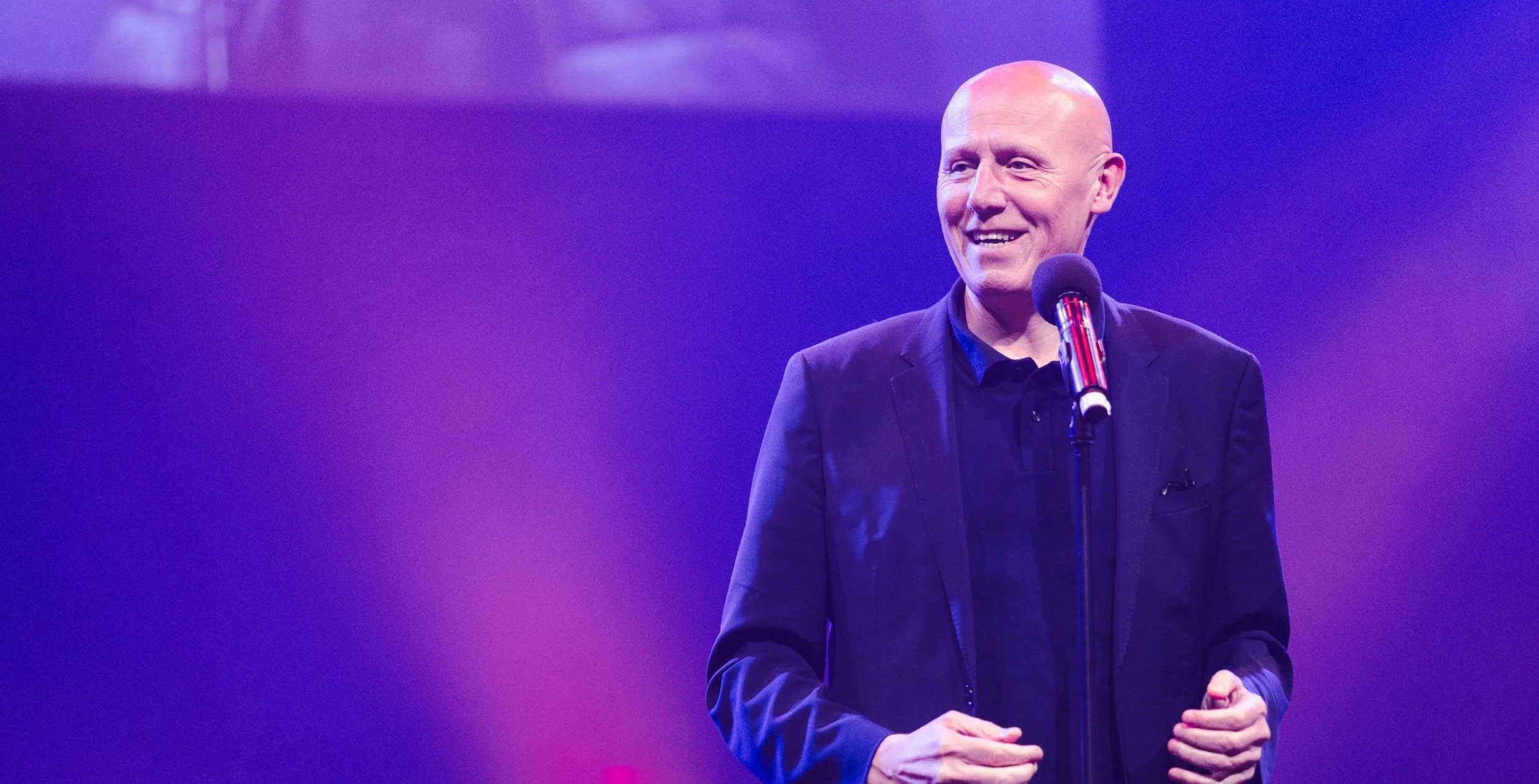
Photo credit: Roundhouse Website